
fundraising best practice

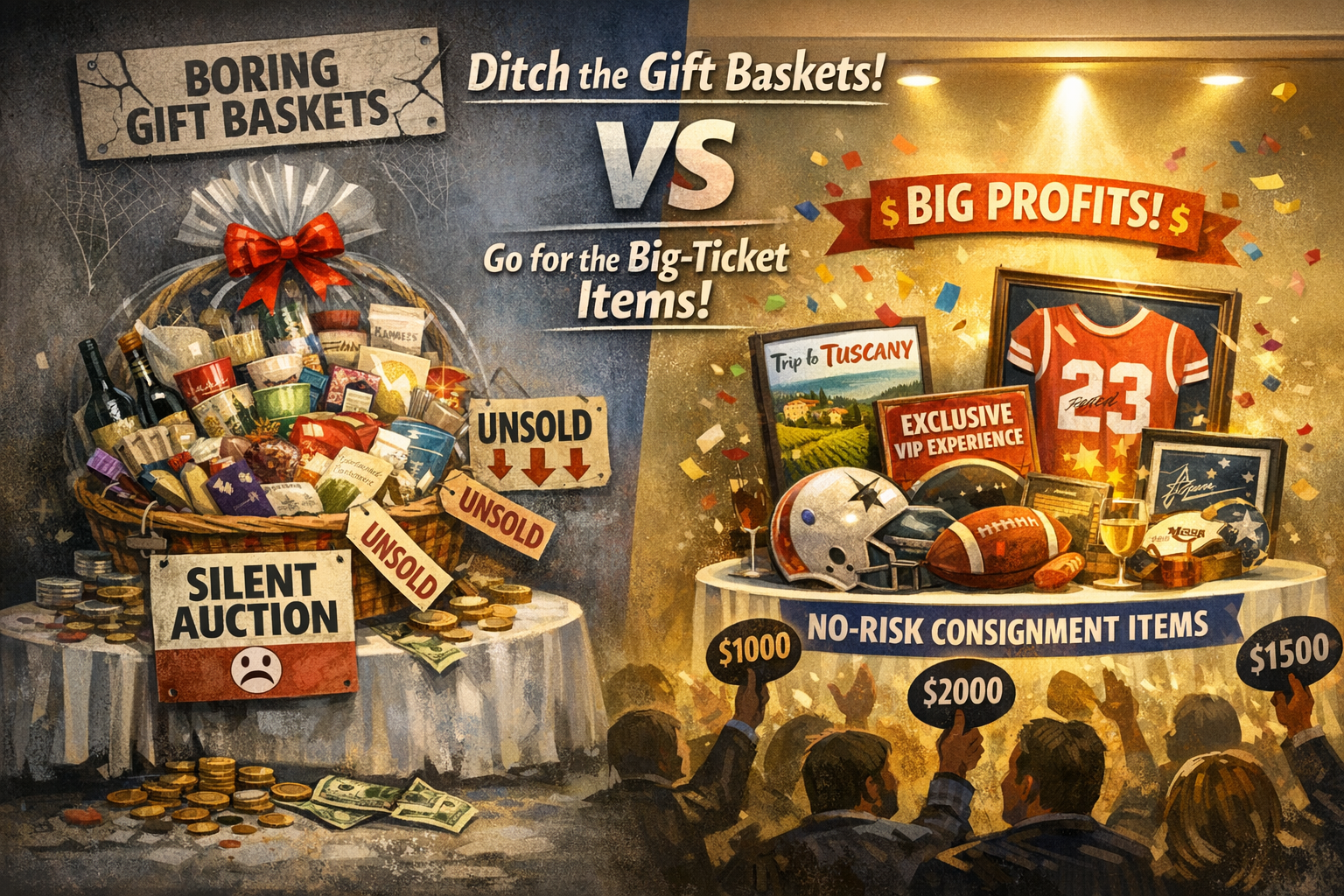
Ditch Gift Baskets in Charity Auctions: Unlock No-Risk Consignment Items for Record-Breaking Nonprofit Fundraising

Ditch Gift Baskets in Charity Auctions: Unlock No-Risk Consignment Items for Record-Breaking Nonprofit Fundraising

Are you tired of silent auction items that barely budge the bidding? Many charities stick with gift baskets year after year, not realizing they're leaving serious money on the table. Let's dive into why this happens, drawing from centuries of fundraising history, and discover how switching to no-risk consignment auction items—like those from BW Unlimited—can skyrocket your benefit auction results. If you're searching for charity auction items near me, high-value silent auction ideas, or proven fundraising strategies for nonprofits, this quick guide has the rock-solid advice you need to raise more with less stress.

The Historical Trap: Why Charities Keep Using Gift Baskets (And Why It's a Mistake)

Gift baskets, or "hampers," trace back to ancient times as symbols of goodwill—think Roman food offerings or medieval charity bundles for the needy. By the Victorian era, they became status symbols, with nobles gifting essentials like treats and necessities on Boxing Day to support communities. Fast-forward to the 20th century: as organized philanthropy boomed, nonprofits adopted baskets for silent auctions and raffles, bundling donated goods for easy appeal.

But here's the catch—charities often repeat this tradition without questioning its effectiveness. Market saturation kicks in when every event features similar spa day baskets, wine and dine packages, or family fun themes. Bidders hunt for deals, capping bids at 1/8th to 1/4th of retail value. The time spent sourcing, assembling, and displaying these? Often wasted on low returns. Nonprofits assume they're "safe" charity fundraising ideas, but data from millions of auction items shows they underperform in competitive settings like benefit auctions, where excitement drives donations.

Why Gift Baskets Flop in Silent and Live Auctions

In a buyer's market flooded with generic items, gift baskets lose their shine. Attendees quickly tally values—like a $200 spa basket—and bid low to snag a bargain, ignoring the cause. Oversupply from repeated donor asks creates fatigue, leading to unsold prizes or minimal engagement. For nonprofit fundraising events, this means missed goals despite the effort in gala planning and item procurement.

Psychologically, bidders avoid committing $10-20 on a bid that feels like overpaying. Instead, they spread budgets thin across tables, diluting revenue. If you're planning charity events and wondering "why aren't my silent auction items selling," it's often this cycle of repetition without innovation.

Flip the Script: Gift Baskets Shine in Raffles, Not Auctions

Raffles transform gift baskets into winners. Why? Low-stakes thrill—donors drop $10-20 on tickets for a chance at the prize, tapping into fun gambling vibes without direct competition. Sell unlimited tickets, and a $200 basket can net 5x retail through volume. It's inclusive, engaging casual supporters, and maximizes logistics like assembly time.

For fundraising advice, reserve baskets for raffles at your benefit gala. Pair them with mission-focused appeals to boost donor engagement and overall event ROI.

How BW Unlimited's No-Risk Consignment Auction Items Crush Gift Baskets

Ready for a game-changer? BW Unlimited Charity Fundraising, a veteran-owned leader in professional charity auctions, offers no-risk consignment auction items that outperform baskets every time. No upfront costs—pay only if it sells. Their inventory includes authentic autographed sports memorabilia with PSA/DNA certification, neon-lit travel packages like Tuscany wine tours or Kentucky Derby VIP escapes, and exclusive experiences that spark bidding wars.

Unlike saturated baskets, these high-demand items create buzz in live auctions, driving 5x+ returns through emotional appeal and scarcity. With nationwide shipping, expert event planning, and George Wooden's dynamic auctioneer services serving DC, Baltimore, Philly, and NYC, BW Unlimited ensures stress-free success. Nonprofits raise millions annually, far exceeding traditional silent auction ideas.

Searching for no-risk consignment model tips, best charity auction items for nonprofits, or travel packages for charity galas? BW Unlimited delivers authentic, high-value options that elevate your fundraiser.

Don't repeat history's mistakes—upgrade your strategy today. Visit bwunlimited.com for no-risk consignment auction items and fundraising advice that works. Let's make your next benefit auction unforgettable, George!
The Most Common Charity Auction Mistakes That Hurt Fundraising Results

There is a well-known saying that perfectly describes what happens in many charity fundraising auctions:

“The definition of insanity is doing the same thing over and over again and expecting a different result.”

Yet year after year, nonprofits repeat the same charity auction items, the same silent auction inventory, and the same fundraising auction strategy. When results stay flat or decline, many organizations are surprised. When fundraising goals are missed, they often look for someone to blame.

Too often, that blame lands on the auctioneer.

In reality, most underperforming charity auctions fail because of auction item strategy, inventory selection, donor psychology, and outdated fundraising myths.


Repeating the Same Charity Auction Items Produces the Same Results

One of the most common nonprofit fundraising mistakes is recycling the same auction items year after year.

I recently attended a meeting with a nonprofit reviewing their fundraising auction. Once again, they offered the same vacation home they have used for years. They also repeated experience items such as “Dinner with the Boss.”

Same auction items.
Same audience.
Same expectations.

Donors remember what they have seen before. They already know whether they want the item, what it is worth to them, or whether they passed on it previously. Once an auction item becomes predictable, competitive bidding disappears.

No benefit auctioneer can force excitement for stale inventory. Auctioneers amplify demand, but they do not create it.

If your charity auction catalog looks the same every year, your fundraising results will too.


When Fundraising Results Decline, Charities Shoot the Messenger

Instead of analyzing auction strategy, many organizations replace the auctioneer when fundraising auctions underperform.

Changing the auctioneer feels decisive, but it avoids the harder work of examining the real problem.

If the charity auction items are recycled, predictable, or uninspiring, changing who holds the microphone will not fix the issue. The problem is not execution. The problem is inventory and strategy.

Before replacing an auctioneer, nonprofits should evaluate:

  • Whether their silent auction items still excite donors

  • Whether live auction experiences feel fresh

  • Whether inventory reflects what donors actually want


The Gift Basket Myth in Silent Auctions

Gift baskets remain one of the most common silent auction items, yet they are also one of the lowest-performing charity auction items.

I often ask nonprofit boards a simple question:

How many gift baskets did you give to your family or friends for Christmas?

The answer is almost always none.

That response says everything. People do not actively want gift baskets. They feel generic, inconvenient, and forgettable. They are included because they are easy to assemble, not because they raise meaningful money.

If you are searching for silent auction items that sell well or high-profit auction items for fundraising, gift baskets are rarely the answer.


Too Many Silent Auction Items Reduce Fundraising Revenue

Another major nonprofit fundraising mistake is offering too many silent auction items for the size of the event.

When there are too many items relative to the number of guests:

  • Bids spread thin

  • Competition disappears

  • Items sell at minimums or not at all

A successful silent auction is curated, not crowded. Scarcity creates urgency. Fewer, higher-quality auction items almost always outperform a room full of filler.

If your goal is to increase silent auction revenue, inventory discipline matters.


Showing Retail Value Anchors Bids Downward

Many charities believe listing retail value helps justify pricing. In reality, it often suppresses bidding.

When donors see retail value, they shift into bargain-hunting mode. They look for deals instead of competing. That mindset caps bids before the auction even starts.

Charity auctions are not retail environments. Guests already expect to pay less than retail. Displaying those numbers trains donors to shop rather than give.


The 50/50 Raffle Problem in Fundraising Events

The 50/50 raffle remains one of the most puzzling fundraising traditions.

Organizations sell raffle tickets and then intentionally give away half of the money raised. There are many raffle formats that:

  • Keep 100 percent of the proceeds

  • Create excitement

  • Increase participation

Raffles should generate unrestricted fundraising revenue, not dilute it.


The Myth That Fully Donated Auction Items Are the Most Important Factor

Many nonprofits believe that fully donated auction items are the key to fundraising success, even while reusing the same donated items year after year.

Donors do not bid high because something was donated.

They bid high because they want it.

People may care about the mission with their hearts, but they spend with their wallets. Exciting auction items, premium experiences, and high perceived value drive competitive bidding.

This is why properly structured consignment auction items often outperform recycled donated items.


Why Charities Resist Consignment Auction Items but Pay for Everything Else

Charities routinely pay for:

  • Venues

  • Catering

  • Alcohol

  • Entertainment

  • Décor

  • Production

None of these expenses directly raise money.

Yet when it comes to auction items, which are the primary revenue engine of the event, many boards resist anything that is not donated. This inconsistency costs charities significant fundraising revenue.

If an organization is willing to invest in the event, it should be willing to invest in the part of the event that raises the money.

No-risk consignment auction items exist specifically to solve this problem by delivering fresh, exciting inventory without financial exposure.


Fix the Fundraising Strategy, Not the Auctioneer

When charity auctions underperform, the issue is rarely the auctioneer. It is almost always the strategy.

Common causes include:

  • Recycled auction items

  • Too many silent auction items

  • Weak or predictable experiences

  • Retail value anchoring

  • Inefficient raffle structures

  • Misunderstanding donor psychology

A professional benefit auctioneer can drive urgency, energy, and competition, but only if the inventory supports it.


What Actually Works in High-Performing Charity Auctions

Successful nonprofit fundraising auctions use a modern, intentional approach that includes:

  • Fresh charity auction items

  • Curated silent auction inventory

  • Premium travel and experience packages

  • A balanced mix of donated and consignment auction items

  • Strategic fundraising auction planning

  • An experienced charity auctioneer

When auction items create desire, donors compete. When donors compete, fundraising goals are exceeded.


Final Thought on Charity Auction Success

If a nonprofit repeats the same auction items and the same fundraising approach year after year, it should not expect different results.

Replacing the auctioneer without fixing the strategy is simply shooting the messenger.

Effective fundraising requires evolution, intentional planning, and a willingness to challenge outdated beliefs.

Doing the same thing over and over again and expecting a different result is not a strategy.

It is insanity.